A really good veterinary nurse is brilliant. They help me in so many ways, and become very familiar with the patients, owners and types of condition that we see most often. So when one of my five Registered Veterinary Nurses says to me I think this cat might have developed hyperthryroidism, I know to trust her.
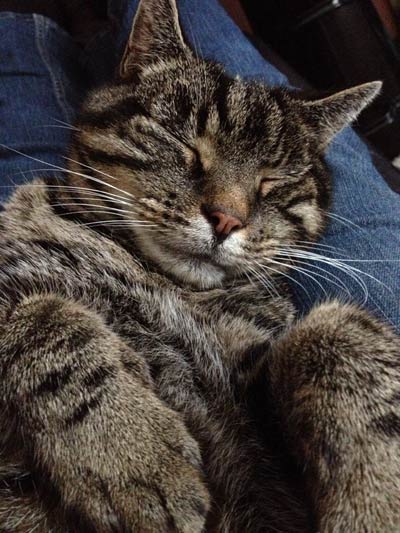
Hyperthryroidism is a disorder in which the thyroid gland, which lives in the neck, becomes over-active. It produces excessive amounts of the thyroid hormone. The immediate symptoms are quite recognisable: the puddy-cat that has been a nice rounded person all their life suddenly becomes a skinny rake, despite have a fabulous appetite. Sometimes the fur is wrong: greasy, scurfy and more matted. Sometimes there are upset stomach problems, and changes in routine, seeking out cooler places to sleep. The worst bit is that it makes the heart beat way too fast, which eventually causes heart failure and death, if left untreated.
A simple blood test confirms the diagnosis, and I perform a full medical check as well, in case there are complicating conditions, as this tends to be a problem of the teenage feline. The tricky bit is helping the newly diagnosed hyperthyroid pet’s owner to decide what to do next, and this is where my wonderful Nurses step in again. There are four choices for management of this condition, each with their pros and cons, and costs. It can be hard for an owner to take it all in and make an informed decision whilst they are still dealing with the emotional upset of learning their pet has a long term, potentially life threatening, condition.
So we have set up Nurse Thyroid Clinics. Our RNVs can now offer to review with the owner the different choices, costs and advantages for treatment. They even help get pets to take their tablets easily, and advise on how to introduce a new diet, if required. They are approachable and kind, aiming to solve every problem.
Learning your pet is poorly, when you thought that the one failsafe sign – the appetite – seemed brilliant, is bad enough. Now we can give the time and information needed to make the right choices too.
Now that you are aware of the symptoms of feline hyperthyroidism, make sure you keep an eye on your cat and give the team a call on 01444 456 886 if you see anything out of the ordinary.
If you would like more information and advice on what to look out for when caring for your cat, download my book, Caring for the Older Cat, using the following link: www.caringforyouroldercat.co.u…